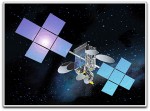
 SES World Skies has announced that its NSS-12 satellite has safely arrived at the European spaceport in Kourou, French Guiana, onboard an Antonov cargo plane. The NSS-12 spacecraft, manufactured by Space Systems/Loral (SS/L), will now be readied for launch onboard an Ariane 5 booster, scheduled for lift off on October 29, 2009.
The NSS-12 satellite will replace NSS-703 at 57 degrees East and cover virtually the entire Eastern Hemisphere, bringing increased capacity and transmission power to a key orbital location at the crossroads of Europe, the Middle East, Africa, Asia and Australia.
The spacecraft features 40 C-band transponders and 48 Ku-band transponders with DTH power levels, as well as elaborate beam interconnectivity and C-/Ku-band cross-strapping. NSS-12 is based on SS/L’s 1300 platform and has been designed to have a minimum expected lifetime of 15 years.
NSS-12 will deliver DTH power and performance through four regional Ku-band spot beams over the Middle East and Europe, Central and South Asia and, for the first time, East Africa. The satellite’s C-band hemispheric beams – one covering Europe, Africa (including Mauritius) and the Middle East, and the other stretching across Asia to Australia – have been augmented by a powerful C-band global beam spanning from the UK to the Far East.
The satellite will reach an estimated two-thirds of the world’s population.
