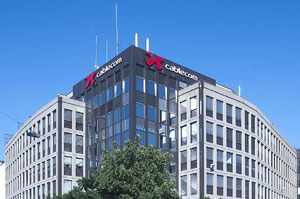
 Cablecom has announced what the Swiss operator is describing as a “streamlining” of its organisational structure. Managing director Rudolf Fischer is to resign, while 150 redundancies are under consideration. Fischer, who has been at Cablecom since 2001, will remain in post until a successor has been appointed.
Gene Musselman, president and chief operating officer, UPC Broadband, said Fischer had made a significant contribution both at Cablecom and to parent company Liberty Global. “It is always the case that when changes have to be implemented quickly, numerous and contradictory requirements have to be reconciled. Rudolf Fischer was very successful in his endeavours.”
Cablecom said fierce competition had led it to look at its operational structures and senior executive departments. Cablecom remains committed to customer services, and the department will remain largely unaffected by the changes.
The company is looking to cushion the blow of any job losses by introducing a recruitment freeze and many use of natural wastage. Alternative working hours and early retirement schemes are also under consideration. A consultation process has begun with employee representatives that is expected to complete in January.
